A short biography

My aunt, Gertrude Emily Lipman, was born in 1905, the second eldest of nine children of Harry and Ethel Sykes (nee Howard). Her father worked as a faceworker in the South Yorkshire coalfields at Elsecar Colliery near Hoyland. Harry and Ethel started their married life together in a small house, in a row of three such houses, in the tiny rural hamlet of Blacker Hill, near Barnsley in South Yorkshire. It was a politically aware household, as was often the case in mining communities, and would lead in time to all their children, especially the boys, espousing the cause of left wing socialism. Harry Sykes on one occasion met James Keir Hardie, a founder and the first leader of the Independent Labour Party.
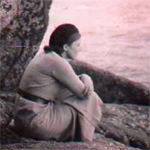
Gertrude Emily Lipman

Gertrude Emily, who would come to be known as ‘Mick’ to her family and wider circle of friends and acquaintances, reached her early teens during the First World War. That terrible conflict made its mark on her young and impressionable mind and left her a convinced atheist, unable to accept the idea of a God who would allow her favourite uncle, Louis Howard, to be killed in the trenches of northern France. Her formal education, like so many of her generation and gender, was limited in formal academic terms to the local village school, but she became an avid reader of all manner of books, both fiction and non-fiction, which more than made up for this earlier limitation and would sustain her thirst for knowledge thought the rest of her life.

Mick was later apprenticed to a milliner in Leeds where she not only learned a craft to earn a living but also added a practical skill to her burgeoning sense of style and elegance which made her stand out amongst her peers. She could transform a slim wardrobe with a strategically placed scarf, or hats worn always at an interesting angle to enhance her finely chiselled features, and create a captivating image, which would lead her future husband to refer to her as a “strikingly original Yorkshire girl”. I have always thought of her as reminiscent of Greta Garbo although without that actress's exaggerated recluseness.

But it was not only her beauty and style that would lead to this epithet. Her sharply enquiring mind and appetite for reading combined with her increasingly strongly held social and political views forged in the cauldron of a new awareness following the First World War. They also combined powerfully with those of her future husband and resulted in a perfect match in which she became such an indispensable support for him and his growing business career both at home and abroad. The pair eventually met through the auspices of Mrs King, the head of the Biology Department at Leeds University and Warden of the ladies’ hall of residence at Weetwood, where Mick had spent a summer sewing and repairing bed linen with her sister Edna.

Blessed with a spirit of adventure, she moved to London in 1927 to try her luck in the wider world, which became the catalyst for Mike Lipman to wind up his business partnership in the north and follow her to London, where they got married the following year. She also had an strongly matriarchal sense of family loyalty, which would lead, in the early 1930’s, to an early migration southwards of her brothers and sisters, and eventually parents, to where the Lipman home in Essex, and a variety of jobs for her brothers, including in the Ekco radio factory in Southend-on-Sea, where Mike had started work as Production Engineer in 1930. To all around them, Mick and Mike — eventually known more simply as the ‘Micks’ — were obviously the best of friends and developed that quality so typical of successful marriages of enhancing each other’s strengths, and keeping a sense of the one always with the other. Her matriarchal and organisational abilities were given fresh expression when, with the expansion of the workforce at the Ekco Radar factory in Malmesbury during the Second World War, she turned her own home, Rodbourne House, into a girls hostel to provide some of the necessary additional accommodation, later voted as the best of its type in the country by an all-party group of female Members of Parliament.

My earliest personal recollections of my aunt were from the early 1950’s when the Micks were living in a large, elegantly furnished apartment in Maida Vale. I would have only been five or six years of age at the time and remember being horrified to learn that I was to sleep overnight on the chaise longue, which I misheard as the “shed long” and imagined it meant I had to sleep in the garden! This difficulty was quickly cleared up when I was shown this long chair. I was to enjoy many such visits to my favourite aunt, firstly as a child to the flat in London, and then later to Ponds Farm in Frittenden in Kent, where Mick invested all her accumulated energy and style in the renovation of a 16th century farmhouse, which became a focal point for the whole family and where Mick loved to entertain.

Shortly before Mike died in 1978, he asked me, as an accountant as well as nephew, to help my aunt deal with all the financial matters that she would be experiencing for the first time, especially those immediately arising from the disposition of his estate. This I gladly undertook, although I soon realised that these new tasks were no more daunting to her than any other challenge in her life. What was obvious, however, was how very much she missed Mike and their rich life together, and without which, understandably, she found it so difficult to come to terms. However, she continued to read and debate the important issues of the day as often as she could, and it was during this last period of her life that I came to spend much more time with her than before, happily fulfilling my understanding of the promise to Mike, and getting to know her better as a person, as distinct from just my aunt.

Three years before she died in 1990, whilst in hospital being treated for pneumonia, she suffered the first of a series of strokes that were to leave her progressively physically incapacitated, and, most poignantly, affecting her eyesight so severely that she was latterly unable to read. I know this loss of sight was the cruellest blow of all and so feel sure that, when she passed away quietly in her sleep in the autumn of 1990, she was ready to leave the stage of life and take her place in the memories of those who come after to fulfil the dreams and aspirations that are their historical and familial legacy.

Stephen Sykes

[text to come]

In vitae leo. Donec eget mauris. Cras suscipit sapien vitae mi. Fusce vehicula nisi eu velit. Maecenas consequat, nibh ut convallis fermentum, orci eros placerat dolor, et facilisis dui eros vitae massa. Vestibulum interdum est ac eros. Proin faucibus aliquet dui. Praesent gravida tortor ut mauris. Quisque rhoncus, lacus at congue porta, diam neque gravida nulla, nec aliquam tortor arcu vitae dolor. Morbi massa justo, consequat sed, pretium at, feugiat ac, neque. Praesent hendrerit tellus ut mi. Nulla tincidunt ligula rhoncus pede. Nam egestas, nunc vitae pellentesque iaculis, odio leo sagittis lectus, eu sodales libero eros sed risus. Duis nisi mauris, lobortis eget, ultricies at, auctor eget, quam. Nullam eget risus. Mauris ullamcorper. Aliquam feugiat.

Subhead 1

Vestibulum dapibus faucibus eros. Aliquam lorem nisi, semper sit amet, egestas quis, bibendum ac, pede. Nulla facilisi. Sed et turpis. Maecenas massa. Sed porttitor auctor elit. Praesent porta diam vitae dolor. Vivamus gravida odio. Nulla laoreet dolor sed urna. Pellentesque eget turpis. Pellentesque habitant morbi tristique senectus et netus et malesuada fames ac turpis egestas. Morbi eleifend. Sed diam purus, lacinia ac, faucibus ut, malesuada at, felis. Duis non nibh. Vivamus elementum.

Subhead 2

Curabitur nulla. Suspendisse ut ipsum vel est blandit ultrices. Vestibulum ante ipsum primis in faucibus orci luctus et ultrices posuere cubilia Curae; Vestibulum in diam. Praesent convallis. Class aptent taciti sociosqu ad litora torquent per conubia nostra, per inceptos hymenaeos. Ut luctus elit id risus. Ut rhoncus neque non orci. Ut facilisis mattis libero. Nunc at nunc. Aliquam dolor ipsum, dapibus quis, congue quis, consequat condimentum, mauris. Ut ac dui. Vestibulum nibh tellus, consectetuer a, porta quis, rutrum eu, felis. Quisque auctor bibendum urna. Donec hendrerit massa ut pede. Quisque posuere tristique quam. Integer at nunc quis ante porta ornare. Donec ipsum turpis, tempor consectetuer, dictum et, mattis ut, nisi.

Last updated: June 2026

At the Lipman-Miliband Trust (“the Trust”), we are committed to protecting your privacy and looking after your personal data. This policy explains what information we collect, why we collect it, how we use it and the rights you have under UK data protection law.

This policy applies to grant applicants, grant recipients, newsletter subscribers, event attendees, donors and anyone visiting our website.

Who we are and how to contact us

The Lipman-Miliband Trust is a registered charity (charity number: 267288). Our registered address is Unit 3, 10–15 Clarendon Road, London, N22 6XJ.

If you have any questions about this policy or how we handle your data, please contact Oonagh Ryder, Trust Coordinator, at info@lipman-miliband.org.uk.

What data we collect and why

We only collect the information we genuinely need to run the Trust, assess grants and stay in touch with people who want to be updated about our work. Depending on how you interact with us, this may include:

  • Grant applicants and grant recipients: Your contact details, project information, financial/organisational details and any political or demographic information you choose to include in your application.
  • Newsletter subscribers: Your name and email address.
  • Donors: Your contact details and donation information.
  • Event attendees: The registration details you provide when signing up.
  • Trustees: Contact details and biographical information required for our charity governance. We also hold health or lifestyle data, such as dietary requirements and accessibility needs, if you choose to disclose this to help us accommodate you.
  • Website visitors: Basic, anonymised server logs provided by our website host. We do not use any tracking or analytics cookies, nor do we host third-party embedded features that track you.
A note on “special category” (sensitive) data

Because the Trust specifically funds political education, applicants naturally need to explain how their projects align with these aims. This often involves sharing political opinions or positions.

Applicants may also voluntarily choose to share information regarding race, ethnicity, trade union membership or disability if it is relevant to their community or project. You do not have to provide this information to be assessed.

Our lawful bases for processing your data

Under the UK GDPR, we must have a valid legal reason to hold and use your data. We rely on the following reasons:

  • Consent: For our newsletter mailing list, we only contact you if you have actively opted in via our website form or requested to join via email. You can withdraw this consent at any time by clicking “unsubscribe”. We also use this basis to collect information from trustees about dietary requirements and accessibility needs.
  • Legitimate interests: For standard personal data related to managing applications, administering grants, financial reporting and the general day-to-day running of the Trust.
  • Public interest archiving (Article 9(2)(j)): Where applicants share political opinions or other sensitive data, we process it strictly for grant assessment, organisational learning and maintaining a historical record of the Trust’s educational and political work.
  • Explicit consent (Article 9(2)(a)): we rely strictly on explicit consent to process data regarding trustees' dietary requirements and accessibility needs.

How we use and share your data

We use your data to manage your applications, process donations, organise events, meet our legal financial reporting obligations and keep you updated on our work.

  • Third-party services: We use established third-party software providers to help run the Trust (such as our email, cloud storage and grant management systems). These providers host and process our data under standard terms that require them to comply with data protection laws. We never sell or trade your data.
  • International data transfer: Some of our software providers (such as Google or Airtable) store or access data outside the UK or EU. We ensure we use reputable platforms that include UK-approved legal safeguards (such as standard contractual clauses) within their standard terms of service.
  • No outsourcing: We do not use external consultants or contractors to handle your personal data.
  • Security: We take appropriate technical and organisational measures to protect personal data. This includes using secure cloud storage and password-protected local computers, with access restricted strictly to those who need it to manage the Trust’s activities.

How long we keep your information

We only keep your information for as long as necessary to fulfill legal duties or our archival purposes:

  • Unsuccessful grant applications: five years.
  • Successful grant applications: seven years after the project ends. After this, key project details are kept permanently in our long-term archive to preserve our organisational history.
  • Trustee records: seven years after you step down.
  • Financial and tax records: seven years (as legally required).
  • Mailing lists: until you choose to unsubscribe.
  • General emails and documents: seven years, unless selected for long-term archiving.
  • Complaints records: six years from resolution.

Your rights

You have the right to ask us to:

  • Provide a copy of the data we hold about you.
  • Correct any information that is inaccurate.
  • Delete your data (where legally permitted).
  • Restrict or object to how we are processing your data.

If you would like to exercise any of these rights, please email us at info@lipman-miliband.org.uk. We will respond to your request within one month.

A note on your safety and anonymity: If you ever have safety, privacy or personal concerns regarding the long-term retention of your data in our historical archive, please reach out to us. We review these situations compassionately on a case-by-case basis and will happily take steps to anonymise, limit or remove your data to protect your well-being.

Complaints

If you are unhappy with how we have handled your data, please let us know. You can reach out by email, phone, or in writing – whichever is easiest for you.

We will acknowledge your complaint promptly and in any event within 30 days of receiving it, share a copy of our internal complaints policy with you and investigate the issue without undue delay. If a request is complex or we receive multiple requests, we may extend the response period by up to two further months. If an extension is needed, we will inform the individual within the first month.

If you are not satisfied with our response, you have the right to lodge a formal complaint with the Information Commissioner’s Office (ICO) at www.ico.org.uk.

Changes to this policy

We may update this policy from time to time to keep up with legal changes or updates to our internal processes. The most up-to-date version will always live right here on our website.

We do our best to make sure the information on this website is accurate and up to date. However, it may not always be complete or free from errors. If you spot something that looks wrong, please let us know.

The Lipman-Miliband Trust is not responsible for any loss or damage that may arise from using this website. Any decisions you make based on the information here are your own responsibility. We may update or change the content without notice.

Copyright

Unless stated otherwise, all material on this site belongs to the Lipman-Miliband Trust. You are welcome to copy or share it for educational, research or social change purposes but please credit the Trust. Our name should not be used in publicity or advertising without our permission.

External Links

This site includes links to other websites that we think may be useful. We are not responsible for the content of those sites and including them does not mean we endorse them. Any decisions you make based on those sites are your own responsibility.

[text to come]

In vitae leo. Donec eget mauris. Cras suscipit sapien vitae mi. Fusce vehicula nisi eu velit. Maecenas consequat, nibh ut convallis fermentum, orci eros placerat dolor, et facilisis dui eros vitae massa. Vestibulum interdum est ac eros. Proin faucibus aliquet dui. Praesent gravida tortor ut mauris. Quisque rhoncus, lacus at congue porta, diam neque gravida nulla, nec aliquam tortor arcu vitae dolor. Morbi massa justo, consequat sed, pretium at, feugiat ac, neque. Praesent hendrerit tellus ut mi. Nulla tincidunt ligula rhoncus pede. Nam egestas, nunc vitae pellentesque iaculis, odio leo sagittis lectus, eu sodales libero eros sed risus. Duis nisi mauris, lobortis eget, ultricies at, auctor eget, quam. Nullam eget risus. Mauris ullamcorper. Aliquam feugiat.

Subhead 1

Vestibulum dapibus faucibus eros. Aliquam lorem nisi, semper sit amet, egestas quis, bibendum ac, pede. Nulla facilisi. Sed et turpis. Maecenas massa. Sed porttitor auctor elit. Praesent porta diam vitae dolor. Vivamus gravida odio. Nulla laoreet dolor sed urna. Pellentesque eget turpis. Pellentesque habitant morbi tristique senectus et netus et malesuada fames ac turpis egestas. Morbi eleifend. Sed diam purus, lacinia ac, faucibus ut, malesuada at, felis. Duis non nibh. Vivamus elementum.

Subhead 2

Curabitur nulla. Suspendisse ut ipsum vel est blandit ultrices. Vestibulum ante ipsum primis in faucibus orci luctus et ultrices posuere cubilia Curae; Vestibulum in diam. Praesent convallis. Class aptent taciti sociosqu ad litora torquent per conubia nostra, per inceptos hymenaeos. Ut luctus elit id risus. Ut rhoncus neque non orci. Ut facilisis mattis libero. Nunc at nunc. Aliquam dolor ipsum, dapibus quis, congue quis, consequat condimentum, mauris. Ut ac dui. Vestibulum nibh tellus, consectetuer a, porta quis, rutrum eu, felis. Quisque auctor bibendum urna. Donec hendrerit massa ut pede. Quisque posuere tristique quam. Integer at nunc quis ante porta ornare. Donec ipsum turpis, tempor consectetuer, dictum et, mattis ut, nisi.