
Ralph Miliband

Adolphe (Ralph) Miliband was born in Brussels on 7 January, 1924 to Polish Jewish parents who had fled economic depression in Warsaw. Hitler’s invasion of Belgium in May 1940 as part of the Nazis’ Western Offensive split the Miliband family in half: Ralph and father Samuel fled to England, while Ralph’s mother Renée and baby sister Nan stayed behind and hid on a farm for the duration of the war. They would not be reunited until 1950. Settling in London as a refugee, the young Miliband changed his name from Adolphe to Ralph and found work as a furniture-remover emptying bombed houses. The huge class inequalities and appalling conditions of immigrants and refugees of the East End slums was to prove an incredibly politicising environment for Miliband. In the summer of 1940, he visited Marx’s grave in Highgate cemetery where he swore an oath to the workers’ cause. Inspired in particular by the writings of Harold Laski, Miliband successfully applied to Laski’s university, the London School of Economics and Political Science (LSE) in 1941. Politically active on campus, Miliband was elected Vice President of the LSE Students’ Union in 1943 but soon afterwards temporarily halted his university career to join the Royal Navy. In 1947, Miliband obtained a First Class degree and was awarded a Leverhulme research studentship to work full-time under Laski’s supervision on his Ph.D. thesis, Popular Thought in the French Revolution, which examined the political ideas of the illiterate ‘menu peuple’ (the ‘common people’). In 1949, Miliband became Assistant Lecturer in Political Science at LSE.
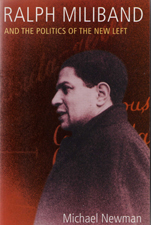
Ralph Miliband

Miliband was to remain at the LSE until 1972 when he was appointed Professor of Politics at the University of Leeds. By this time, Ralph Miliband had become one of the leading Marxist thinkers and principal figures associated with the British New Left that had emerged after the Soviet suppression of the 1956 Hungarian uprising and the expulsion of dissident members of the Communist Party like Edward Thompson and John Saville for their criticism of Stalinism. Miliband’s first book, Parliamentary Socialism: A Study in the Politics of Labour (1961), argued through detailed historical study of the politics of Labourism since 1900 how the party's dogmatic attachment to the dominant parliamentary representative system compromised its commitment to socialism and class struggle. In 1964, Miliband launched the annual, Socialist Register, which he would co-edit with first Saville and then Leo Panitch until his death. Miliband’s growing scepticism about the parliamentary road to socialism grew throughout the 1960s and was combined with equal rejection of Communist and Trotskyist alternatives. The experience renewed his belief in accessible socialist education as one of the most important elements of building the mass socialist alternatives to capitalism. Perhaps Miliband’s most famous and important intellectual contribution came with the 1969 publication of The State in Capitalist Society, a sociological analysis of how the state in the advanced capitalist world was dominated by class interests, fundamentally undermining pluralist notions of the state as a neutral arbiter between competing interest groups.

In 1974, Ralph Miliband took up his role as director of the Lipman Trust. After leaving Leeds in 1978, Miliband became a roving academic teacher for the rest of his life, spending much time in North America. During the 1980s, he became increasingly involved in efforts to build and empower the independent left in Britain along with Tony Benn, Hilary Wainwright, Raymond Williams and others, encapsulated in the Chesterfield Socialist Conferences out of which emerged the Socialist Movement and the independent green-left magazine Red Pepper (1994). All of this was symptomatic of Miliband’s lifetime commitment to developing socialist education and thought within communities and outside of the narrow confines of academia.

[text to come]

In vitae leo. Donec eget mauris. Cras suscipit sapien vitae mi. Fusce vehicula nisi eu velit. Maecenas consequat, nibh ut convallis fermentum, orci eros placerat dolor, et facilisis dui eros vitae massa. Vestibulum interdum est ac eros. Proin faucibus aliquet dui. Praesent gravida tortor ut mauris. Quisque rhoncus, lacus at congue porta, diam neque gravida nulla, nec aliquam tortor arcu vitae dolor. Morbi massa justo, consequat sed, pretium at, feugiat ac, neque. Praesent hendrerit tellus ut mi. Nulla tincidunt ligula rhoncus pede. Nam egestas, nunc vitae pellentesque iaculis, odio leo sagittis lectus, eu sodales libero eros sed risus. Duis nisi mauris, lobortis eget, ultricies at, auctor eget, quam. Nullam eget risus. Mauris ullamcorper. Aliquam feugiat.

Subhead 1

Vestibulum dapibus faucibus eros. Aliquam lorem nisi, semper sit amet, egestas quis, bibendum ac, pede. Nulla facilisi. Sed et turpis. Maecenas massa. Sed porttitor auctor elit. Praesent porta diam vitae dolor. Vivamus gravida odio. Nulla laoreet dolor sed urna. Pellentesque eget turpis. Pellentesque habitant morbi tristique senectus et netus et malesuada fames ac turpis egestas. Morbi eleifend. Sed diam purus, lacinia ac, faucibus ut, malesuada at, felis. Duis non nibh. Vivamus elementum.

Subhead 2

Curabitur nulla. Suspendisse ut ipsum vel est blandit ultrices. Vestibulum ante ipsum primis in faucibus orci luctus et ultrices posuere cubilia Curae; Vestibulum in diam. Praesent convallis. Class aptent taciti sociosqu ad litora torquent per conubia nostra, per inceptos hymenaeos. Ut luctus elit id risus. Ut rhoncus neque non orci. Ut facilisis mattis libero. Nunc at nunc. Aliquam dolor ipsum, dapibus quis, congue quis, consequat condimentum, mauris. Ut ac dui. Vestibulum nibh tellus, consectetuer a, porta quis, rutrum eu, felis. Quisque auctor bibendum urna. Donec hendrerit massa ut pede. Quisque posuere tristique quam. Integer at nunc quis ante porta ornare. Donec ipsum turpis, tempor consectetuer, dictum et, mattis ut, nisi.

Last updated: June 2026

At the Lipman-Miliband Trust (“the Trust”), we are committed to protecting your privacy and looking after your personal data. This policy explains what information we collect, why we collect it, how we use it and the rights you have under UK data protection law.

This policy applies to grant applicants, grant recipients, newsletter subscribers, event attendees, donors and anyone visiting our website.

Who we are and how to contact us

The Lipman-Miliband Trust is a registered charity (charity number: 267288). Our registered address is Unit 3, 10–15 Clarendon Road, London, N22 6XJ.

If you have any questions about this policy or how we handle your data, please contact Oonagh Ryder, Trust Coordinator, at info@lipman-miliband.org.uk.

What data we collect and why

We only collect the information we genuinely need to run the Trust, assess grants and stay in touch with people who want to be updated about our work. Depending on how you interact with us, this may include:

  • Grant applicants and grant recipients: Your contact details, project information, financial/organisational details and any political or demographic information you choose to include in your application.
  • Newsletter subscribers: Your name and email address.
  • Donors: Your contact details and donation information.
  • Event attendees: The registration details you provide when signing up.
  • Trustees: Contact details and biographical information required for our charity governance. We also hold health or lifestyle data, such as dietary requirements and accessibility needs, if you choose to disclose this to help us accommodate you.
  • Website visitors: Basic, anonymised server logs provided by our website host. We do not use any tracking or analytics cookies, nor do we host third-party embedded features that track you.
A note on “special category” (sensitive) data

Because the Trust specifically funds political education, applicants naturally need to explain how their projects align with these aims. This often involves sharing political opinions or positions.

Applicants may also voluntarily choose to share information regarding race, ethnicity, trade union membership or disability if it is relevant to their community or project. You do not have to provide this information to be assessed.

Our lawful bases for processing your data

Under the UK GDPR, we must have a valid legal reason to hold and use your data. We rely on the following reasons:

  • Consent: For our newsletter mailing list, we only contact you if you have actively opted in via our website form or requested to join via email. You can withdraw this consent at any time by clicking “unsubscribe”. We also use this basis to collect information from trustees about dietary requirements and accessibility needs.
  • Legitimate interests: For standard personal data related to managing applications, administering grants, financial reporting and the general day-to-day running of the Trust.
  • Public interest archiving (Article 9(2)(j)): Where applicants share political opinions or other sensitive data, we process it strictly for grant assessment, organisational learning and maintaining a historical record of the Trust’s educational and political work.
  • Explicit consent (Article 9(2)(a)): we rely strictly on explicit consent to process data regarding trustees' dietary requirements and accessibility needs.

How we use and share your data

We use your data to manage your applications, process donations, organise events, meet our legal financial reporting obligations and keep you updated on our work.

  • Third-party services: We use established third-party software providers to help run the Trust (such as our email, cloud storage and grant management systems). These providers host and process our data under standard terms that require them to comply with data protection laws. We never sell or trade your data.
  • International data transfer: Some of our software providers (such as Google or Airtable) store or access data outside the UK or EU. We ensure we use reputable platforms that include UK-approved legal safeguards (such as standard contractual clauses) within their standard terms of service.
  • No outsourcing: We do not use external consultants or contractors to handle your personal data.
  • Security: We take appropriate technical and organisational measures to protect personal data. This includes using secure cloud storage and password-protected local computers, with access restricted strictly to those who need it to manage the Trust’s activities.

How long we keep your information

We only keep your information for as long as necessary to fulfill legal duties or our archival purposes:

  • Unsuccessful grant applications: five years.
  • Successful grant applications: seven years after the project ends. After this, key project details are kept permanently in our long-term archive to preserve our organisational history.
  • Trustee records: seven years after you step down.
  • Financial and tax records: seven years (as legally required).
  • Mailing lists: until you choose to unsubscribe.
  • General emails and documents: seven years, unless selected for long-term archiving.
  • Complaints records: six years from resolution.

Your rights

You have the right to ask us to:

  • Provide a copy of the data we hold about you.
  • Correct any information that is inaccurate.
  • Delete your data (where legally permitted).
  • Restrict or object to how we are processing your data.

If you would like to exercise any of these rights, please email us at info@lipman-miliband.org.uk. We will respond to your request within one month.

A note on your safety and anonymity: If you ever have safety, privacy or personal concerns regarding the long-term retention of your data in our historical archive, please reach out to us. We review these situations compassionately on a case-by-case basis and will happily take steps to anonymise, limit or remove your data to protect your well-being.

Complaints

If you are unhappy with how we have handled your data, please let us know. You can reach out by email, phone, or in writing – whichever is easiest for you.

We will acknowledge your complaint promptly and in any event within 30 days of receiving it, share a copy of our internal complaints policy with you and investigate the issue without undue delay. If a request is complex or we receive multiple requests, we may extend the response period by up to two further months. If an extension is needed, we will inform the individual within the first month.

If you are not satisfied with our response, you have the right to lodge a formal complaint with the Information Commissioner’s Office (ICO) at www.ico.org.uk.

Changes to this policy

We may update this policy from time to time to keep up with legal changes or updates to our internal processes. The most up-to-date version will always live right here on our website.

We do our best to make sure the information on this website is accurate and up to date. However, it may not always be complete or free from errors. If you spot something that looks wrong, please let us know.

The Lipman-Miliband Trust is not responsible for any loss or damage that may arise from using this website. Any decisions you make based on the information here are your own responsibility. We may update or change the content without notice.

Copyright

Unless stated otherwise, all material on this site belongs to the Lipman-Miliband Trust. You are welcome to copy or share it for educational, research or social change purposes but please credit the Trust. Our name should not be used in publicity or advertising without our permission.

External Links

This site includes links to other websites that we think may be useful. We are not responsible for the content of those sites and including them does not mean we endorse them. Any decisions you make based on those sites are your own responsibility.

[text to come]

In vitae leo. Donec eget mauris. Cras suscipit sapien vitae mi. Fusce vehicula nisi eu velit. Maecenas consequat, nibh ut convallis fermentum, orci eros placerat dolor, et facilisis dui eros vitae massa. Vestibulum interdum est ac eros. Proin faucibus aliquet dui. Praesent gravida tortor ut mauris. Quisque rhoncus, lacus at congue porta, diam neque gravida nulla, nec aliquam tortor arcu vitae dolor. Morbi massa justo, consequat sed, pretium at, feugiat ac, neque. Praesent hendrerit tellus ut mi. Nulla tincidunt ligula rhoncus pede. Nam egestas, nunc vitae pellentesque iaculis, odio leo sagittis lectus, eu sodales libero eros sed risus. Duis nisi mauris, lobortis eget, ultricies at, auctor eget, quam. Nullam eget risus. Mauris ullamcorper. Aliquam feugiat.

Subhead 1

Vestibulum dapibus faucibus eros. Aliquam lorem nisi, semper sit amet, egestas quis, bibendum ac, pede. Nulla facilisi. Sed et turpis. Maecenas massa. Sed porttitor auctor elit. Praesent porta diam vitae dolor. Vivamus gravida odio. Nulla laoreet dolor sed urna. Pellentesque eget turpis. Pellentesque habitant morbi tristique senectus et netus et malesuada fames ac turpis egestas. Morbi eleifend. Sed diam purus, lacinia ac, faucibus ut, malesuada at, felis. Duis non nibh. Vivamus elementum.

Subhead 2

Curabitur nulla. Suspendisse ut ipsum vel est blandit ultrices. Vestibulum ante ipsum primis in faucibus orci luctus et ultrices posuere cubilia Curae; Vestibulum in diam. Praesent convallis. Class aptent taciti sociosqu ad litora torquent per conubia nostra, per inceptos hymenaeos. Ut luctus elit id risus. Ut rhoncus neque non orci. Ut facilisis mattis libero. Nunc at nunc. Aliquam dolor ipsum, dapibus quis, congue quis, consequat condimentum, mauris. Ut ac dui. Vestibulum nibh tellus, consectetuer a, porta quis, rutrum eu, felis. Quisque auctor bibendum urna. Donec hendrerit massa ut pede. Quisque posuere tristique quam. Integer at nunc quis ante porta ornare. Donec ipsum turpis, tempor consectetuer, dictum et, mattis ut, nisi.